We act as a commercial plumber for many local and residential businesses
Water Heater Repair & Installation in Salinas, CA
Hot water is an essential part of modern living. From a warm shower in the morning to running the dishwasher after dinner, your water heater works silently in the background to provide comfort and sanitation. When this system fails, it is immediately noticeable and highly disruptive. At Salinas Plumbing Pros, we specialize in comprehensive water heater repair and installation services. We are dedicated to ensuring that the residents and businesses of Salinas have reliable access to hot water year round.
Water Heater Repair and Installation in Salinas, California – Traditional Tank and Tankless Experts
Salinas Plumbing Pros handles water heater repair, water heater replacement, water heater installation, tankless water heater service, sediment flushes, and everything in between for homeowners and property owners throughout Salinas, California and the surrounding Monterey County communities. Whether you have a gas water heater that stopped lighting, an electric water heater that has gone completely silent, a tankless unit throwing error codes, or an aging tank that has been limping along for years and finally gave out, we diagnose and fix it right the first time. Salinas has a mix of housing ages and styles, from older homes in established neighborhoods like Alisal that may still have original equipment to newer developments in Monte Bella and Boronda where tankless water heaters have become the norm, and we work confidently across all of them. Thorough diagnostics come before any repair recommendation, we keep your home clean and your schedule respected throughout the job, and we are straightforward about when a repair makes sense versus when water heater replacement is the smarter long-term call. Here is a full look at the water heater problems we solve every day in Salinas.
Common Water Heater Problems We Fix in Salinas
No Hot Water or Insufficient Hot Water
Nothing disrupts a morning routine faster than stepping into a cold shower. When a Salinas household goes from normal hot water to nothing overnight, the cause can range from a simple thermostat reset to a failed heating element, a tripped circuit breaker, or a gas valve that has stopped functioning. When hot water runs out too quickly, the problem is often a sediment-loaded tank that has reduced the effective heating capacity, or a unit that was never properly sized for the household using it. Fixing no hot water is one of the most common calls we receive in Salinas, and same day water heater repair is available for situations that genuinely cannot wait.
Recognizing the Problem
- No hot water at all from any tap in the home
- Hot water lasts only a few minutes before going cold, even with light use
- Water temperature is consistently lukewarm rather than fully hot
- Hot water takes an unusually long time to arrive at faucets throughout the home
- Unit appears to be running normally but the water never gets adequately warm
- Breaker for the water heater keeps tripping when the unit tries to heat
- Gas valve indicator shows fault status or the pilot will not stay lit
- Only one fixture in the home lacks hot water while others are fine
When we arrive for a no hot water call, we check the power or gas supply first, then the thermostat settings, then the internal components like the heating elements in an electric water heater or the gas valve and thermocouple assembly in a gas unit. In many cases, water heater element replacement or a thermostat replacement restores full performance without needing a new unit. We always test the system under actual operating conditions before leaving to confirm the repair held, rather than relying on a visual check alone.
Salinas homes with hard water conditions that go unaddressed can accumulate sediment in the tank over time, and the resulting reduction in heating capacity is one of the more common causes of a tank that seems to be working but just cannot keep up with demand.
Leaking Water Heater
A water heater leaking from the bottom is one of those problems where the severity varies enormously depending on the source. A small drip from the drain valve is a quick fix. Water pooling continuously beneath the tank typically means the inner lining has corroded through, and that is a replacement situation, not a repair. A water heater leaking from the top around the supply connections may be a fittings issue that is far less serious. Knowing the difference is what determines whether you are looking at a minor repair or a new unit, and getting that diagnosis right saves homeowners a lot of unnecessary expense or, conversely, a lot of unnecessary water damage.
Recognizing the Problem
- Water pools on the floor around the base of the tank with no other source
- Rust staining or mineral deposits on the outside of the tank near the bottom
- Water heater leaking from the top where the supply or output lines connect
- Pressure relief valve is dripping or running water through the discharge pipe
- Damp or discolored flooring in the utility closet or garage near the heater
- Drain valve at the bottom of the tank has visible mineral buildup or is weeping
- Hot water in the home has started carrying sediment or discoloration
- Musty smell in the utility area that was not there before
When we assess a leaking water heater in a Salinas home, we trace the water to its exact source before drawing any conclusions. If the pressure relief valve is releasing water, that may indicate a separate issue with system pressure that caused the valve to open correctly, which means fixing only the valve misses the underlying cause. If the tank itself is the source, we walk through the replacement options clearly so you can make an informed decision about what goes in next. For a water heater leaking from top connections, re-fitting or replacing the supply and output connections is often a same-visit repair.
Tankless Water Heater Issues
Tankless water heater technology delivers hot water on demand without storing a reserve, which means when a tankless unit in a Salinas home stops working properly, the entire household loses hot water immediately. Tankless water heater repair requires a different diagnostic approach than traditional tank service, and not every plumber in the area has extensive hands-on experience with these systems. We do. We have worked on tankless units throughout Salinas and the surrounding communities, and we know the difference between an error code pointing to a scale buildup issue and one indicating a gas pressure problem or a heat exchanger fault.
Recognizing the Problem
- Tankless unit activates when hot water is turned on but shuts off after a short time
- Hot water temperature fluctuates during use, going from hot to lukewarm to hot
- Tankless water heater not heating water despite activating normally
- Error code displayed on the unit’s control panel with no hot water output
- Unit does not activate at all when a hot water fixture is opened
- Hot water takes longer than it used to for a tankless unit in the same location
- Unit produces hot water for one fixture but struggles when two are running simultaneously
- Unusual sounds from the unit during operation that were not present before
Diagnosing a tankless water heater starts with reading the fault codes, checking the water flow rate triggering the unit, confirming adequate gas pressure or electrical supply, and inspecting the heat exchanger for scale accumulation. In Salinas, the local water conditions can promote mineral deposit buildup inside tankless heat exchangers over time, which reduces efficiency and can eventually cause the unit to shut down to protect itself. A descaling service restores performance without replacing the unit in many cases. For tankless water heater installation questions related to sizing, gas line capacity, or venting, we handle the full assessment before recommending a specific unit.
Tankless water heater installation cost in Salinas varies based on the fuel type, the required gas line or electrical work, and the venting configuration of the home, which is why we walk through all of those factors before any installation begins.
Rusty or Discolored Hot Water
If rust-colored or brownish water appears only from the hot tap in a Salinas home, the water heater is almost certainly the source. This typically means the anode rod inside the tank has been fully consumed and the tank lining has begun to corrode, which signals the end of the unit’s useful life. Occasionally, rusty hot water from taps in Salinas can come from old galvanized pipe runs in older homes rather than the heater itself, so identifying the actual source matters before recommending a course of action.
Recognizing the Problem
- Rust-colored or orange-tinted water appears only from hot water taps
- Water has a metallic smell or taste when drawn from the hot side
- Small reddish particles or sediment appear when hot water fills a tub or glass
- Discoloration is most noticeable first thing in the morning after water has sat overnight
- Cold water from the same tap runs clear with no discoloration
- Water heater is older and has never had an anode rod replacement
- Rust-colored water appears from hot taps throughout the home, not just one fixture
- Recently replaced or well-maintained unit is producing discolored hot water unexpectedly
If the discoloration is coming from an older tank that has never had anode rod replacement, we inspect the tank interior condition before recommending repair or replacement. An anode rod that has been completely consumed and left the tank unprotected for an extended period often means the tank itself has corroded beyond the point where a new anode rod will restore the water quality. In that situation, water heater replacement is the correct answer. For newer units, a thorough flush combined with an anode rod replacement can resolve the issue entirely.
Strange Noises from the Water Heater
A water heater that has started making loud popping, rumbling, or banging sounds has not suddenly developed a personality. Those noises are almost always sediment that has accumulated on the bottom of the tank. As the heating element heats water beneath the sediment layer, steam bubbles push through and create the characteristic popping and rumbling that homeowners in Salinas often describe as alarming. Beyond the noise, sediment buildup forces the heater to work harder to heat the same amount of water, which reduces efficiency and shortens the life of the unit.
Recognizing the Problem
- Loud popping or cracking sounds during or after a heating cycle
- Deep rumbling or low boiling sound from the bottom of the tank
- Water heater making loud noises that have gotten progressively worse over weeks or months
- Unit sounds like it is running constantly but hot water availability has decreased
- Knocking sound when hot water is drawn from fixtures throughout the home
- Hissing sound that suggests steam is escaping through a fitting or valve
- Sounds that occur only at specific times of day or during heavy hot water use
- New sounds that appeared after a period of reduced hot water use, like after a vacation
A thorough water heater flush removes the sediment layer and restores normal operation in many cases. The flush process involves draining the tank completely, flushing it until the discharge runs clear, and inspecting the anode rod condition while the tank is down. If the sediment accumulation has been significant for an extended period and the tank walls show signs of corrosion damage, the flush may not fully resolve the noise or restore full performance, and replacement becomes the better path. Regular flushing is one of the most effective water heater maintenance steps available to Salinas homeowners.
Pilot Light Problems on Gas Water Heaters
A gas water heater with a pilot light that keeps going out is frustrating and, in some cases, a sign of a component that needs replacement. The thermocouple is the most common culprit, a small device that senses whether the pilot is lit and keeps the gas valve open while it is. When the thermocouple wears out or gets coated with deposits, it can no longer accurately sense the pilot flame and shuts the gas off as a safety measure. A gas water heater pilot light that won’t stay lit in a Salinas home is a job for a plumber, not a DIY reset that gets repeated every few days.
Recognizing the Problem
- Pilot light that goes out on its own after being relit, within hours or days
- Pilot that will not stay lit even when held for the full manufacturer-recommended time
- No hot water in the morning when there was hot water the night before
- Pilot ignites briefly when the button is held but extinguishes the moment the button is released
- Visible debris or deposits on the thermocouple tip
- Drafty utility area that may be affecting the pilot flame from outside air movement
- Smell of gas near the unit even when the pilot is not lit
- Older gas water heater where the thermocouple and pilot assembly have never been serviced
If you smell gas or suspect a gas leak, go outside immediately and call 911 – this is a serious emergency that needs urgent attention from the gas company.
For a standard thermocouple failure, the repair is relatively straightforward and restores normal pilot operation quickly. If the gas valve itself is faulty, the calculation shifts toward whether replacing the valve on an older unit makes sense compared to putting that money toward a new installation. We make that assessment honestly based on the age and condition of the unit, not on what generates the most work for us.
Water Heater Not Turning On
An electric water heater not working at all, with no heat and no response from the controls, narrows the diagnosis down to a handful of possible causes. A tripped high-limit switch is one of the most common, often caused by a thermostat that has failed and allowed water to overheat. Burned-out heating elements, a failed thermostat, or a wiring issue at the unit are the other primary causes. For gas units that will not turn on at all, the issue is typically in the gas supply, the gas valve, or the ignition system rather than the tank itself.
Recognizing the Problem
- Completely cold water from all hot taps, with no indication the heater is running
- Electric water heater not working despite the breaker being in the on position
- High-limit or reset button on the unit has tripped and the unit will not stay on
- Gas unit will not ignite at all and the pilot assembly is intact
- Thermostat indicator shows the unit should be running but no heat is produced
- Unit makes no sound at all when hot water is drawn from a fixture
- Breaker trips immediately whenever the unit is powered on
- Unit was running fine and then stopped working completely without any apparent cause
For electric units, testing the heating elements with a multimeter confirms whether water heater element replacement is needed, or whether the issue is in the thermostat or the wiring. For gas units, confirming adequate gas supply pressure and checking the gas valve for proper function gives us the information needed to diagnose the problem accurately. In some cases a fix no hot water emergency in Salinas is resolved the same day with a part replacement. In others, especially with older units showing multiple component failures, the recommendation shifts toward replacement.
Sediment Buildup and Poor Performance
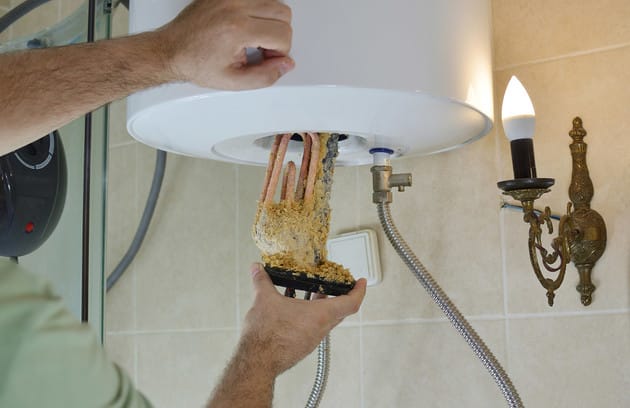
Sediment accumulation in a water heater tank is a gradual process that most homeowners do not notice until performance has already declined significantly. Calcium and magnesium minerals dissolved in the water supply drop out of solution as the water heats and settle to the bottom of the tank over time. In Salinas, water hardness is moderate, and while it is not at the extreme end of California’s hard water spectrum, it is sufficient to produce meaningful sediment accumulation in tanks that are not periodically flushed. The result is reduced heating efficiency, shorter element or burner life, and the characteristic sounds that signal a tank in trouble.
Recognizing the Problem
- Hot water recovery time has increased noticeably over recent months
- Household is running out of hot water faster than it did a year ago with the same usage
- Energy costs have risen without a change in household consumption habits
- Discolored or cloudy water comes from hot taps when drawing a full tub
- Small gritty particles occasionally appear in hot water at taps or showerheads
- Tank is making sounds that were not present when the unit was newer
- Unit is years old and has never had a water heater flush or maintenance service
- Water heater thermostat replacement has been needed more than once in recent years
A proper water heater flush restores the inside of the tank by removing the accumulated sediment layer and flushing until the discharge water runs clear. During the process we also inspect the anode rod, which sacrificially corrodes to protect the tank lining. If the rod is significantly depleted, replacement extends the life of the tank considerably. Water heater maintenance in the form of an annual or biennial flush is the most cost-effective way to extend the service life of a traditional tank heater in a Salinas home.
Water Heater Repair vs Replacement in Salinas
One of the most common questions we hear from Salinas homeowners is whether it makes more sense to repair a failing water heater or replace it entirely. The honest answer depends on a set of factors that we evaluate on every call, and we give straightforward guidance rather than a default push in either direction.
When to repair: If the unit is relatively recent, under eight years old for a traditional tank heater, and the failure is a single component like a thermocouple, a heating element, or a thermostat, repair is almost always the right choice. The cost of the component is modest, the repair restores full performance, and the tank itself still has years of useful life remaining. A leaking water heater at the top connection points or at the pressure relief valve is also typically a repair situation rather than a replacement one, assuming the tank itself is in good condition.
When to replace: A tank that is leaking from the base is almost always corroding through from the inside, and no repair addresses that. A unit that is approaching or past the twelve-to-fifteen-year mark for a traditional gas or electric tank heater and has started failing in multiple ways, such as a bad element combined with a thermostat issue and a deteriorating anode rod, is telling you it is at the end of its service life. Repairing each component one at a time at this stage is a cycle that typically ends in a full replacement within a year or two anyway, often at a time less convenient than a planned replacement would have been.
A useful way to think about the decision for Salinas homeowners is the repair-to-remaining-value ratio. If a repair costs more than roughly half the cost of a comparable new unit, and the existing unit is past the midpoint of its expected life, replacement is usually the better investment. A new unit comes with fresh components throughout, modern energy efficiency, and years of reliable performance ahead of it.
For older homes in Salinas where the water heater may have been running for fifteen years or more without major service, the conversation about when to replace vs repair water heater is one we have regularly. We look at the tank condition, the surrounding installation quality, the pipe connections, and the venting before making a recommendation, because the installation itself sometimes needs updating regardless of which direction the unit goes.
We also factor in the opportunity cost of the situation. If a Salinas homeowner is already without hot water and has called for emergency service, choosing a unit that will need replacement within the next couple of years means another emergency call, another disruption, and another installation cost in the near future. When the numbers point toward replacement, we say so clearly and help you choose the right replacement unit for your home and household size.
Tankless Water Heater Installation and Repair
Tankless water heaters have become one of the most requested upgrades we handle in Salinas, and for good reason. By heating water on demand rather than maintaining a stored tank of hot water around the clock, a properly sized and installed tankless unit can reduce water heating energy consumption significantly while also freeing up physical space in a utility closet or garage. For Salinas households with two or more bathrooms and consistent demand for hot water throughout the day, a tankless system installed and sized correctly is a significant quality-of-life improvement.
The key phrase in that description is “installed and sized correctly.” Tankless water heater installation is more involved than a traditional tank swap. It requires assessing the household’s simultaneous hot water demand, the capacity of the existing gas line or electrical service, the venting requirements specific to the unit being installed, and in some cases, upgrading the gas line to support the higher flow rate a tankless unit requires at peak demand. We handle all of that assessment before recommending a specific unit, because a tankless heater that is undersized for the home it is installed in will never fully satisfy demand no matter how well it is maintained.
Tankless water heater repair for existing units in Salinas homes involves reading the fault codes, inspecting the heat exchanger for scale buildup, verifying adequate gas pressure and venting function, and testing the flow sensor that triggers the unit to activate. The scale buildup issue is one we see frequently in Salinas, where the water conditions can promote mineral deposit accumulation inside the narrow channels of the heat exchanger over time. A descaling service using the appropriate solution, performed on a schedule that matches the local water hardness, keeps the unit operating efficiently and prevents the premature failures that come from ignoring the buildup.
For homeowners who are comparing tankless versus traditional replacement options, we walk through both paths honestly. Tankless systems have a higher upfront installation investment but lower operating costs and a longer expected service life than traditional tanks. For a Salinas family that plans to stay in their home for ten or more years, the math often favors tankless. For someone who expects to sell within a few years, a quality traditional unit may be the simpler choice. We help you think through it rather than defaulting to one recommendation for everyone.
Water Heater Installation Services in Salinas
Whether you are replacing a failed unit on an emergency basis, upgrading from a traditional tank to a tankless water heater installation, or installing a water heater in a newly configured space, we handle the full process from start to finish. For a traditional tank replacement in a Salinas home, we disconnect and remove the old unit, inspect the connection points and venting, install the new unit to current standards, fill and purge air from the system, test for leaks at all connection points, and confirm hot water delivery throughout the home before we leave.
For a new tankless water heater installation in Salinas, the process is more involved. We assess the location, the gas line capacity or electrical service panel, the venting pathway, and the household demand before selecting the appropriate unit. The installation includes mounting the unit, running or modifying the gas supply or electrical connection, installing the proper venting, setting the temperature controls, and running the unit through its startup sequence while checking for error codes and confirming adequate flow rates.
We install new water heaters in Salinas in homes of every age and configuration, including older properties where the utility space may need modification to accommodate a new unit, and condominiums where the installation access and building requirements add complexity. Our goal on every installation is a clean, professional result that meets current standards and performs reliably for the full expected service life of the unit.
Why Salinas Homeowners Choose Salinas Plumbing Pros for Water Heater Service
Local Expertise With Salinas Homes and Water Conditions
We have been working in Salinas long enough to know the water heater configurations common in each generation of local housing. An older home in the Natividad area likely has a different setup than a newer place in Boronda, and the water conditions, the gas infrastructure, and the available venting pathways are all factors that vary across the city. That local knowledge lets us diagnose accurately and recommend correctly, without spending extra time figuring out what someone unfamiliar with Salinas housing would have to figure out on every call.
Meticulous Diagnostics and Root-Cause Fixes
A water heater repair that addresses the symptom without understanding what caused it will often recur. We see this with pressure relief valves that are replaced without checking whether the system pressure is actually too high, or with heating elements that are swapped without testing the thermostat that controlled them. We diagnose systematically so that the repair we make is addressing the actual problem, not just the visible one. A homeowner in Sherwood Park came to us after a previous company had replaced a heating element that failed again within two months. We found a faulty thermostat that was overheating the element. That kind of thoroughness is how we work every time.
Respect for Your Home and Family During the Job
Water heater work often happens in tight utility spaces, and getting the job done without tracking water, debris, or marks through the surrounding area is a matter of professionalism. We use protective covers on floors and nearby surfaces, we dispose of old equipment properly, and we clean up before leaving. We also communicate throughout the job, which means you always know what we found, what we are doing about it, and what to watch for after we leave. No surprises.
Skilled With Both Traditional and Tankless Systems
We work on every major brand of traditional and tankless water heater installed in Salinas homes, and we have the diagnostic tools specific to tankless systems that a general handyman or less-specialized plumber would not carry. When a tankless unit in a Salinas home is throwing an error code, we do not guess at the cause and swap parts hoping to land on the right one. We read the fault correctly, confirm the diagnosis with physical testing, and make the repair that will actually hold. That skill set matters particularly as tankless water heaters become more common in Salinas, because a unit that is misdiagnosed can remain problematic even after work is done on it.
Fast Same-Day Response When You Need Hot Water Now
A household without hot water cannot wait a week. We offer same day water heater repair and replacement response in Salinas for situations that are genuinely urgent. Fix no hot water emergency calls in Salinas are handled as a priority, not scheduled for whenever is convenient for us. We carry replacement parts for the most common water heater makes and models found in the area so that a same-day repair does not depend on a parts run that adds hours to the wait.
Our Water Heater Service Process in Salinas
1. You Reach Out
Contact us and describe what is happening with your water heater. Note the type, age if known, and the symptoms you are seeing. For emergency situations with no hot water or active leaking, we prioritize the call accordingly.
2. We Schedule and Arrive
We confirm a service window that works for your schedule and arrive on time. For same day service, we work around our current schedule to get there as quickly as possible. We come prepared based on what you described.
3. Thorough Diagnosis and Clear Explanation
We inspect the unit, the connections, and any related components before making any recommendations. We explain what we found in plain language, lay out the options, and let you decide with full information rather than partial information delivered as a take-it-or-leave-it situation.
4. Repair or Installation
We complete the repair or the installation to current standards using quality components. For replacements, we handle the removal of the old unit and the full installation of the new one, including all connections, venting, and testing.
5. Final Testing and Cleanup
After the repair or installation, we test the system under actual operating conditions, confirm hot water delivery throughout the home, check for any leaks at connection points, and clean up the work area completely before leaving. We walk you through what was done and provide any relevant maintenance guidance.
Water Heater Service Area in and Around Salinas, California
We provide water heater repair and installation services throughout Salinas and the surrounding Monterey County communities. From older homes near downtown Salinas and the Alisal corridor to newer construction in Monte Bella and the areas along the edges of the city, we handle water heater work in every residential configuration found in this part of California. Water heater repair for condo in Salinas situations is part of our regular service, and we understand the installation constraints and building access considerations that come with multi-unit properties.
- Salinas (all neighborhoods, including Alisal, Sherwood Park, North Salinas, South Salinas, Monte Bella, Boronda, Natividad, and Creekbridge)
- Seaside
- Marina
- Monterey
- Pacific Grove
- Carmel-by-the-Sea
- Soledad
- Gonzales
- Greenfield
- King City
True local water heater service in Salinas means we know the homes, the water conditions, the gas infrastructure, and the common failure points for the equipment types found in this area. Install new water heater in a Salinas home is not a generic task for us. It is a job informed by familiarity with the city’s housing stock and the specific requirements of the property in front of us. That is what separates local service from a company that could be anywhere.
Professional Water Heater Repair vs DIY Attempts
Water heaters involve a combination of high-temperature water, gas or electrical systems, and pressure management that creates real safety risks when handled without proper knowledge and tools. We are not in the business of discouraging capable homeowners from handling things themselves where it is safe and appropriate. But water heater work is largely not in that category, and here is why.
Electric water heaters run on 240-volt circuits. Working on the internal components without properly confirming the power is off at the breaker, and without understanding how to verify that with a meter rather than assuming, is a genuine electrocution risk. A wet utility space with a leaking tank and live electrical components is among the more dangerous home repair situations that exist.
Gas water heaters add combustion risk to the list. A gas connection that is tightened by feel rather than tested under pressure can leak at a level that is not immediately detectable but is continuously dangerous. Gas valve replacement requires confirming the valve is compatible with the unit, connecting it correctly, and pressure-testing the downstream side before lighting the pilot. This is not a YouTube tutorial situation.
Scalding water is a specific hazard during water heater work. A tank that is being drained may still contain extremely hot water even if the heating element has been off for an hour. Connecting to supply lines while residual pressure is present can cause a sudden release of very hot water. We drain tanks carefully and methodically with full attention to the temperature and pressure involved.
For the sediment issues common in Salinas homes due to local water conditions, a DIY flush attempt that does not fully open and flush the drain valve, or that leaves scale particles circulating through the plumbing, can clog aerators and fixtures throughout the home and create a different problem. A proper flush includes the right procedure for the valve condition and the sediment level in that specific tank.
Modern tankless water heater systems have control boards, flow sensors, and venting components that interact in specific ways. A homeowner who replaces a flow sensor without checking whether the actual trigger for the error was a venting issue, a gas pressure problem, or a scale-restricted heat exchanger has spent money and time without fixing the actual problem. Proper diagnosis requires the right tools and familiarity with the specific system.
The bottom line is that water heater work in Salinas, whether it is a gas water heater pilot repair, an electric water heater element swap, or a full tankless installation, carries enough complexity and enough safety risk that a professional call almost always results in a better outcome, a faster resolution, and a lower total cost when you factor in the risks of misdiagnosis or an accident.
Reach out to us for assistance and we will take care of your water heater from diagnosis through final testing.
Plumbing Pro Services
Complete Plumbing Care for Your Entire Home
Whether it’s the kitchen, bathroom, or sewer line, we have the tools and training to handle any challenge your plumbing system throws at us.
We Deliver Expert Results
Don’t gamble with your plumbing. We combine years of experience with modern technology to deliver lasting repairs and installations. Our team respects your time and your property.
- Fixture Installation
- Leak Detection
- Modern Diagnostics
- Drain Cleaning
Frequently Asked Questions About Water Heater Repair and Installation in Salinas
Water heater repair in Salinas?
Yes, Salinas Plumbing Pros provides water heater repair throughout Salinas and the surrounding Monterey County communities. We handle gas water heaters, electric water heaters, tankless units, and everything in between. Same day repair is available for urgent situations where a household has no hot water. Contact us today and describe what the unit is doing so we can come prepared with the most likely parts needed.
How much does water heater replacement cost in Salinas?
The total investment for water heater replacement in Salinas depends on the type of unit being installed, whether any gas line or electrical work is required, the complexity of the venting configuration, and the size needed for the household. Traditional tank replacements involve different considerations than a new tankless water heater installation. We assess all of those factors during the diagnostic visit and give you a clear picture of what is involved before any work begins.
Do you install tankless water heaters?
Yes. Tankless water heater installation is one of our specialties in Salinas. We handle the full process including demand assessment, gas line or electrical review, venting design, unit selection, and the complete installation and startup. We also service and repair tankless units from all major manufacturers, including diagnosing error codes, descaling heat exchangers, and replacing flow sensors, gas valves, and control components.
What should I do if I have no hot water?
First, check whether the breaker for an electric water heater has tripped, or whether the pilot light on a gas unit has gone out. If the breaker is fine and the pilot will not stay lit, or if there is no obvious explanation, do not continue resetting or relighting repeatedly, especially if there is any gas smell. Contact us for a same day water heater repair call. If the unit is leaking actively, shut off the water supply to the heater using the cold water inlet valve at the top of the tank and call us right away.
How long does water heater installation take?
How long water heater replacement takes in Salinas depends on the type of unit and the complexity of the installation. A straightforward tank-for-tank swap in a standard configuration typically takes two to three hours from arrival to restored hot water. A tankless water heater installation that requires gas line work, new venting, or significant access modifications will take longer. We give you a realistic time estimate during the assessment so you can plan your day accordingly.
Do you work on older homes in Salinas?
Absolutely. Older homes in Salinas are a significant part of our daily work. Best water heater for older homes in Salinas depends on the gas line configuration, available venting pathways, and the space constraints of the existing utility area. We assess all of those factors before recommending a unit, and we handle any pipe or venting modifications needed to bring the installation up to current standards as part of the project.
What are the signs my water heater needs replacement?
The clearest signs a Salinas water heater needs replacement include: the unit is twelve or more years old, the tank is leaking from the base, the hot water is consistently rusty or discolored, multiple components have failed in the same unit within a year, or the unit has lost significant heating capacity that a flush and component replacement have not restored. If two or more of those conditions apply at the same time, replacement is almost always the right decision.
How do I know if I need a water heater flush?
A water heater flush is typically recommended every one to two years for tanks in areas with moderate water hardness, which describes most of the Salinas service area. Signs you may be overdue include popping or rumbling sounds from the tank, slower hot water recovery than in previous years, or discolored hot water. We can inspect the tank and advise on whether a flush is appropriate or whether the sediment accumulation has progressed to the point where replacement is the better path.
Can you fix a water heater leaking from the top?
Yes, a water heater leaking from top connections in a Salinas home is often a fittings issue that can be repaired without replacing the unit. Corroded or loose connections on the cold water inlet or hot water outlet, a failed dielectric fitting, or a leaking pressure relief valve discharge pipe are all top-side issues we repair regularly. The repair approach depends on what exactly is leaking and the condition of the surrounding connections.
What if my water heater is making a loud banging or popping noise?
Water heater making loud noises in Salinas is almost always caused by sediment buildup at the bottom of the tank. A thorough flush often resolves the noise by removing the mineral layer that is causing the steam bubbles. If the unit is significantly old or the sediment has been accumulating for many years without a flush, we assess whether the tank itself has been affected by the buildup before recommending flush versus replacement.
Whether you need a quick repair, a full replacement, or a new tankless system installed in your Salinas home, we handle it all with the same level of care and thoroughness.
Contact us today and let Salinas Plumbing Pros restore your hot water the right way.
Zip codes we serve: 93901, 93902, 93905, 93906, 93907, 93908, 93912, 93915, 93933, 93940, 93942, 93943, 93944, 93950, 93955, 93960, 93962